
Potential Issues That Can Arise Due to Poor Cable Infrastructure
Bottom Line
Poor cable infrastructure can cause slow systems, unstable connections, dropped calls, downtime, higher IT support costs, security risks, overheating, safety hazards and difficult future upgrades.
The biggest problem is that these issues often hide in plain sight. Your internet line may be fast, your computers may be new, and your software may be working, but if the cabling behind your network is messy, outdated or poorly installed, your business can still suffer every day. For businesses in Tokai and Cape Town, identifying poor cable infrastructure consequences early can prevent productivity loss, reduce frustration and help your IT systems perform the way they should.
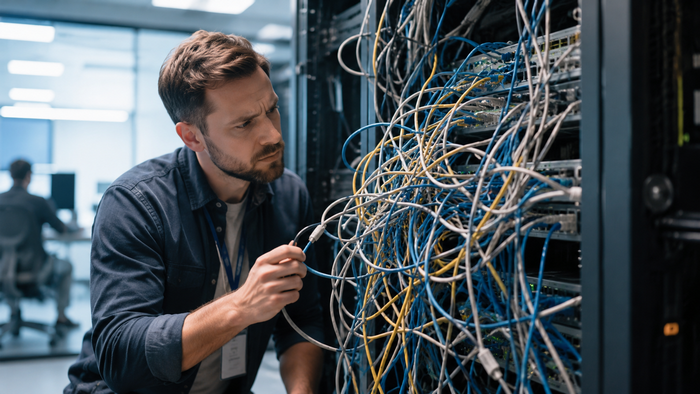
Table of Contents
- Why Cable Infrastructure Matters More Than Most Businesses Realise
- What Poor Cable Infrastructure Looks Like
- Slow Network Performance and System Delays
- Intermittent Downtime and Unstable Connections
- Loose Connections and Physical Cable Damage
- Outdated Cables That Cannot Support Modern Business Needs
- Poor Cable Management and Longer Troubleshooting Times
- Signal Degradation and Data Transmission Problems
- Overheating and Airflow Issues in Network Cabinets
- Safety Hazards Caused by Messy Cabling
- Security and Operational Risks
- Difficult Network Upgrades and Scalability Problems
- How F1 Connect Helps Businesses in Tokai and Cape Town
- Frequently Asked Questions
- Get Your Network Infrastructure Checked Before It Costs You More
Why Cable Infrastructure Matters More Than Most Businesses Realise
Network cabling is easy to ignore.
It sits behind desks, inside walls, above ceilings and in cabinets that most people never open. Because it is not as visible as computers, routers or screens, many businesses forget how important it is.
But cabling is the physical backbone of your IT environment.
Every email, cloud request, file transfer, VoIP call and video meeting depends on data moving through your network. If the cabling is weak, cluttered, damaged or outdated, the entire system feels the impact.
That is why poor cable infrastructure causes such frustrating problems. It rarely looks dramatic at first. Your systems do not always crash completely. Instead, things become slow, unreliable and harder to manage.
A file takes longer to open. A video call freezes. A shared drive disconnects. Someone complains that the internet is slow, even though the fibre line is supposed to be fast.
Then it happens again.
That is when poor cable infrastructure consequences start becoming visible. Staff lose time, IT support takes longer, and your business starts working around problems that should not exist.
For businesses in Tokai and Cape Town, where cloud systems, remote work, VoIP and digital tools are now part of daily operations, your cable infrastructure cannot be an afterthought. It must be clean, reliable, properly routed and ready to support your business.
What Poor Cable Infrastructure Looks Like
Poor cable infrastructure does not always mean a cable is completely broken.
Sometimes the problem is far more subtle.
It may look like:
- tangled cables in a network cabinet
- cables with no labels
- old cables mixed with newer equipment
- cables bent sharply behind desks
- loose patch leads
- overloaded cable trays
- cables running too close to electrical equipment
- temporary cables that became permanent
- network points that no one can trace
- cabinets with poor airflow because cables block ventilation
A messy cabinet may not look urgent to a business owner, but it creates real risk.
When cables are not labelled, technicians waste time tracing connections. When cables are too tightly bent, performance can degrade. When cabling is old or low quality, it may not support the speeds your business expects. When network cabinets are overcrowded, airflow suffers and equipment can overheat.
Poor cabling creates a weak foundation.
And when the foundation is weak, every part of the IT environment becomes harder to trust.
Slow Network Performance and System Delays
One of the most common issues caused by poor cable infrastructure is slow network performance.
This is also one of the most misunderstood problems.
Many businesses assume slow systems mean they need faster internet. Sometimes that is true. But often, the internet line is not the real issue. The problem sits inside the office network.
Poor cabling can slow down:
- file transfers
- cloud applications
- shared drives
- printing
- VoIP calls
- video meetings
- database access
- internal communication between devices
Imagine your team trying to work in a busy office where every system responds a few seconds too slowly. Nobody stops working completely, but everyone works with friction.
A designer waits for files to upload. An accounts person waits for cloud software to respond. A sales person loses momentum because the CRM takes too long to load. A manager joins a meeting and spends the first two minutes asking if everyone can hear them.
That is not a small issue.
Slow network performance drains time from the business every single day. It makes staff less efficient and creates frustration that builds over time.
Proper cable infrastructure helps data move cleanly and consistently across the network. It allows your systems to perform closer to their actual capacity instead of being restricted by weak physical connections.
Intermittent Downtime and Unstable Connections
Complete network failure is easy to notice.
Intermittent downtime is worse because it is harder to diagnose.
One minute everything works. The next minute a device disconnects. Then it comes back. Then another user complains. Then the issue disappears before anyone can investigate properly.
This is common when cable infrastructure is poor.
Unstable connections may be caused by:
- loose cable connections
- damaged cable ends
- poor termination
- worn patch leads
- interference
- overloaded or messy cabinets
- cables under physical strain
Loose Connections and Physical Cable Damage
Cables are physical components. They can bend, stretch, wear out and break.
Poor installation makes this worse.
Common physical cable problems include:
- cables pulled too tightly
- cables bent beyond recommended limits
- connectors that are not properly seated
- damaged outer sheathing
- crushed cables under furniture
- cables exposed to heat or moisture
- poor quality cable ends
A cable does not have to snap completely to cause problems. Even minor damage can reduce performance, create packet loss or cause intermittent failures.
Outdated Cables That Cannot Support Modern Business Needs
A cable installation that worked well ten years ago may not support the way your business operates today.
Modern offices rely on far more data than before. Cloud platforms, video calls, online backups, VoIP systems, shared drives and connected devices all place pressure on the network.
Older or low grade cables may struggle to support:
- higher speeds
- increased data volumes
- modern switches and routers
- cloud based workflows
- video communication
- growing device numbers
Poor Cable Management and Longer Troubleshooting Times
Poor cable management is one of the most visible signs of weak infrastructure.
A tangled cabinet may still work, but it creates problems the moment something goes wrong.
When cables are not labelled or organised, technicians have to spend longer identifying:
- which cable connects to which device
- which port serves which office
- which line is faulty
- which cable can be safely removed
- which connection is still active
This increases troubleshooting time and longer troubleshooting means longer downtime.
Signal Degradation and Data Transmission Problems
Poor cable infrastructure can also affect signal quality.
Data must move cleanly between devices. When cables are damaged, poorly routed or exposed to interference, the signal can degrade.
This may cause:
- slow speeds
- data errors
- dropped connections
- poor call quality
- unstable video meetings
- inconsistent application performance
Overheating and Airflow Issues in Network Cabinets
Cable infrastructure does not only affect data flow.
It can also affect airflow.
Network cabinets often house switches, routers, backup devices and other equipment that generate heat. These devices need proper ventilation to remain stable.
When cables are badly managed, they can block airflow inside the cabinet. This traps heat around equipment and increases the risk of failure.
Overheating can cause:
- reduced hardware lifespan
- unexpected shutdowns
- slower equipment performance
- increased risk of network failure
- higher maintenance costs
This is especially important in offices with compact network cabinets or limited ventilation.
Safety Hazards Caused by Messy Cabling
Poor cable infrastructure can also create physical safety risks.
Loose or badly routed cables may cause:
- trip hazards
- blocked access to equipment
- strain on plugs and ports
- accidental disconnections
- unsafe working conditions
In some environments, messy cabling can also make it harder to access critical infrastructure during emergencies or maintenance work.
Security and Operational Risks
Poor cable infrastructure can also create security and operational risks.
A disorganised network is harder to control.
If ports are not labelled, cables are not documented and access points are unclear, it becomes harder to know what is connected to the network.
This can create problems such as:
- unknown devices connected to the network
- unsecured network points
- difficulty isolating faults
- accidental disconnection of important systems
- weak visibility over infrastructure
Difficult Network Upgrades and Scalability Problems
Businesses add staff, devices, software, meeting rooms, cloud systems and security tools. Your cable infrastructure must support that growth.
Poor cabling makes upgrades difficult because the existing setup is unclear or unreliable. Before anything new can be installed, technicians may first need to untangle the old environment.
That creates extra cost and delay.
Scalability problems often appear when businesses need to:
- add more users
- install new access points
- improve internet speeds
- upgrade switches
- support VoIP systems
- expand into new office areas
- improve backup systems
- introduce new security tools
If the cabling infrastructure was not planned properly, every upgrade becomes harder than it should be.
A structured cabling approach makes future growth easier. It gives your business a clearer, more reliable foundation to build on.
How F1 Connect Helps Businesses in Tokai and Cape Town
At F1 Connect, we support businesses across Cape Town with practical IT services that help keep systems stable, secure and productive.
We understand that IT problems are not always caused by obvious failures. Sometimes the real issue sits behind the scenes in the infrastructure that supports everything else.
Our services include:
- on-site and remote IT support
- system troubleshooting
- virus and malware removal
- data backup and recovery
- preventative maintenance
Because we are based locally, businesses in Tokai and the Southern Suburbs benefit from a team that understands their working environment and can provide practical support when systems need attention.
When a business experiences poor network performance, we help look at the bigger picture. The issue might involve hardware, software, internet connectivity, cabling, maintenance or a combination of several factors.
We help identify problems properly, support your systems consistently and reduce the recurring IT frustrations that slow your team down.
For businesses dealing with poor cable infrastructure consequences, local support matters. When physical infrastructure needs attention, having a nearby IT team can make the process easier and more responsive.
Frequently Asked Questions
What are the potential issues that can arise due to poor cable infrastructure?
Potential issues include slow network performance, dropped connections, intermittent downtime, signal degradation, overheating equipment, longer troubleshooting times, safety risks and difficult future upgrades.
What are poor cable infrastructure consequences for businesses?
Poor cable infrastructure consequences include reduced productivity, higher IT support costs, unstable systems, frustrated staff, increased downtime and limited ability to scale the network.
Can poor cabling slow down internet speed?
Yes. Even if your internet line is fast, poor internal cabling can restrict performance and make systems feel slow.
How do I know if my network cabling is bad?
Common signs include messy cabinets, unlabelled cables, frequent disconnections, slow file transfers, poor VoIP call quality and recurring network issues.
Why is cable management important?
Cable management helps technicians troubleshoot faster, improves airflow, reduces accidental disconnections and makes future upgrades easier.
Can bad cabling cause downtime?
Yes. Loose connections, damaged cables or poor termination can cause intermittent downtime and unstable network performance.
Should businesses replace old network cabling?
Businesses should review old cabling if they experience slow speeds, network instability or if the current infrastructure cannot support modern devices and software.
Why should I use local IT support in Tokai?
Local IT support helps businesses get practical assistance faster, especially when physical infrastructure needs inspection or on-site troubleshooting.
Get Your Network Infrastructure Checked Before It Costs You More
Poor cable infrastructure rarely announces itself loudly.
It usually shows up as slow systems, dropped connections, repeated complaints and IT issues that never seem fully resolved.
That is why businesses should not ignore cabling.
If you are concerned about potential issues that can arise due to poor cable infrastructure, now is the right time to take action.
Fill in the enquiry form and speak with our team about getting your network environment checked properly.